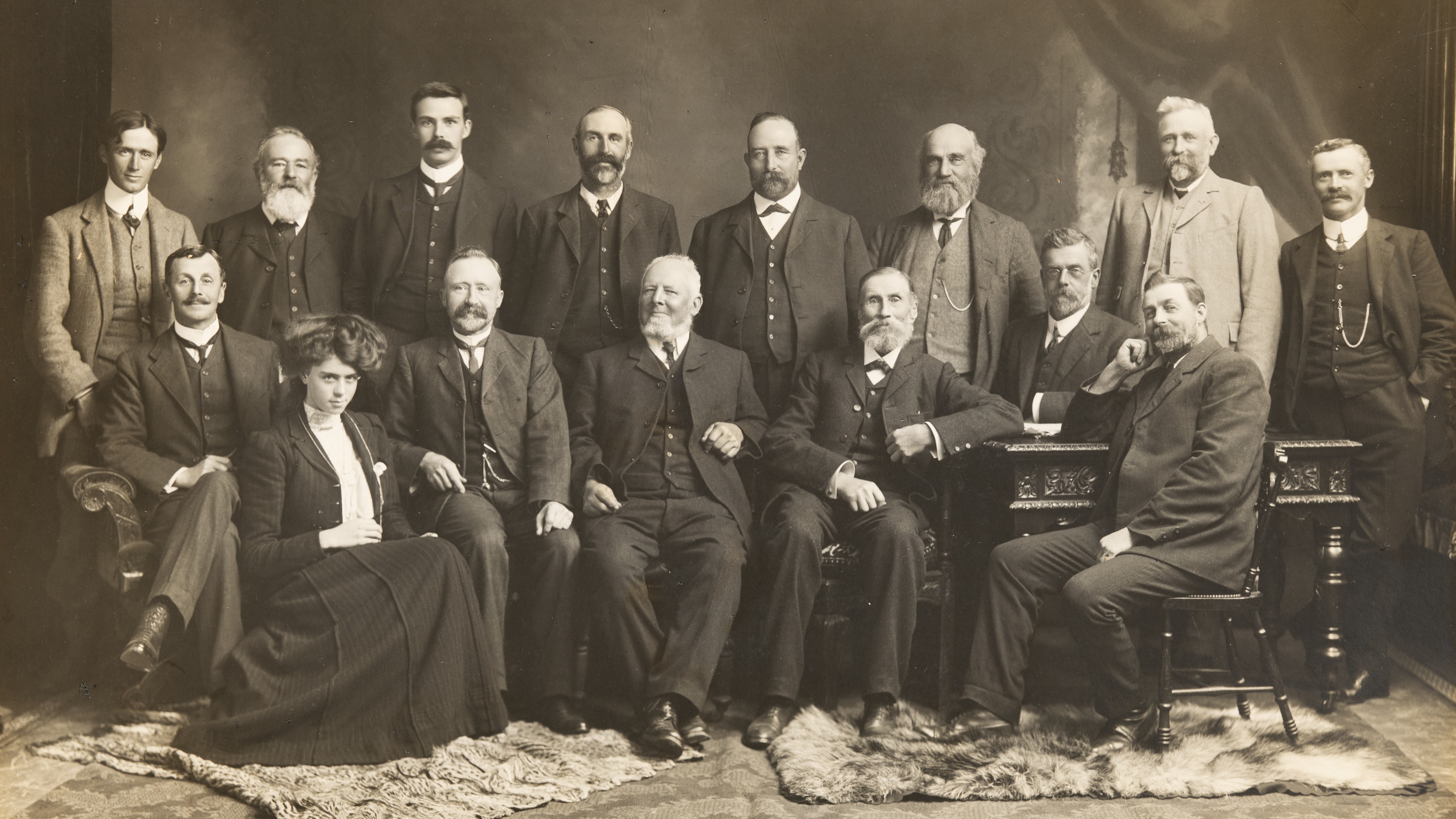


A small business card in Canterbury Museum’s manuscript collection has a story to tell about a trailblazing Christchurch businesswoman who became one of the highest-paid women executives in Australia.
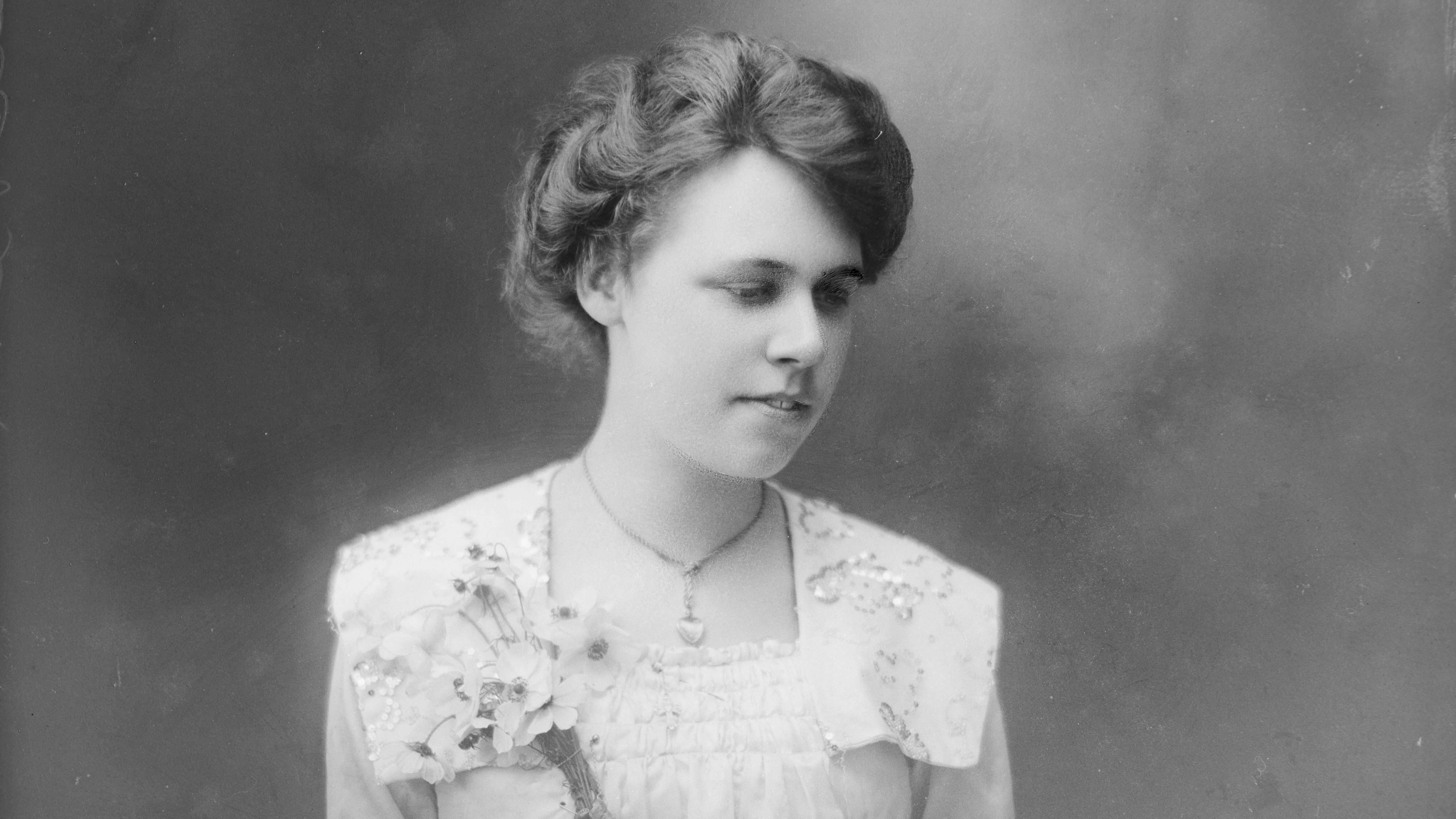
Lucy Esther Josephine Hart (1881–1942) started working as a court stenographer in 1907, but her career took off when she joined the staff of a touring theatre company in 1911.
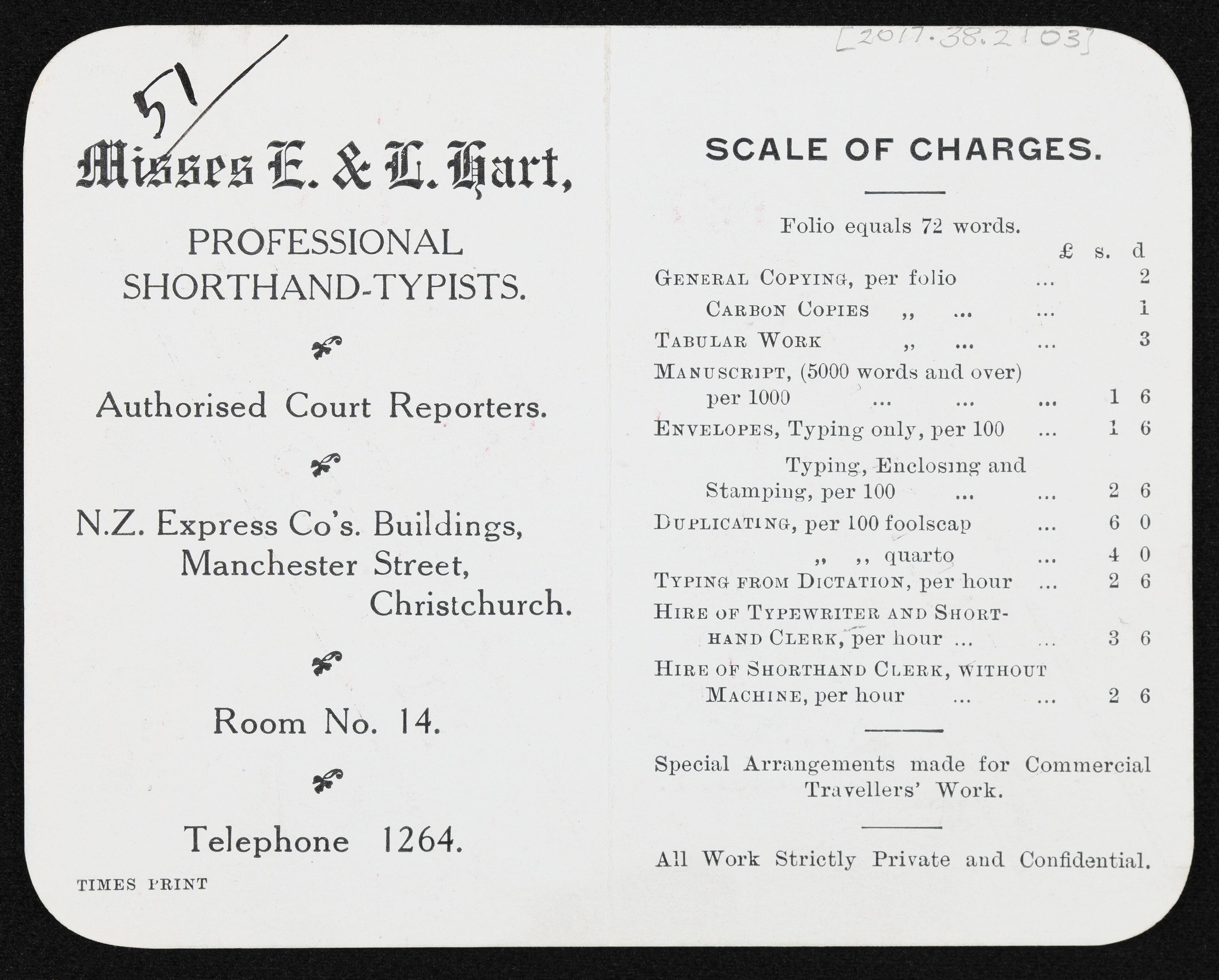
The business card shows Lucy at the start of her career. The card advertises a professional shorthand and typing service offered by Lucy and her older sister Ethel Hart (1877–1923) in 1906. Lucy and Ethel were part of a group of young women who developed business and writing careers after studying commercial skills like typing and Pitman’s shorthand, a phonetic system of rapid writing used to record speeches and court proceedings in the days before audio recording technology.
From the 1890s, women could find employment in offices as typists and shorthand writers and were accepted by male employers because they could be paid less. Despite this, working in an office or in journalism was an attractive option for well-educated young women who did not care for a career in nursing or school teaching, the few other options available to them.
A business career appealed to the daughters of Mary Ann and George Robert Hart. At least four of their seven daughters studied shorthand and typing. Mary Ann and George had both travelled to Canterbury on the Cressey, one of the First Four Ships, when they were children and married in Christchurch in 1863. George worked for the Press newspaper for 50 years as a chief reporter and theatre critic until his sudden death in 1911.
In 1895, after two years study at a Christchurch business school, Lucy’s sister Ethel was the first New Zealander to achieve a certificate from Pitman & Sons, England, for 150 words a minute. Lucy attended the same school and in 1898 obtained her certificate for a shorthand speed of 160 words a minute.
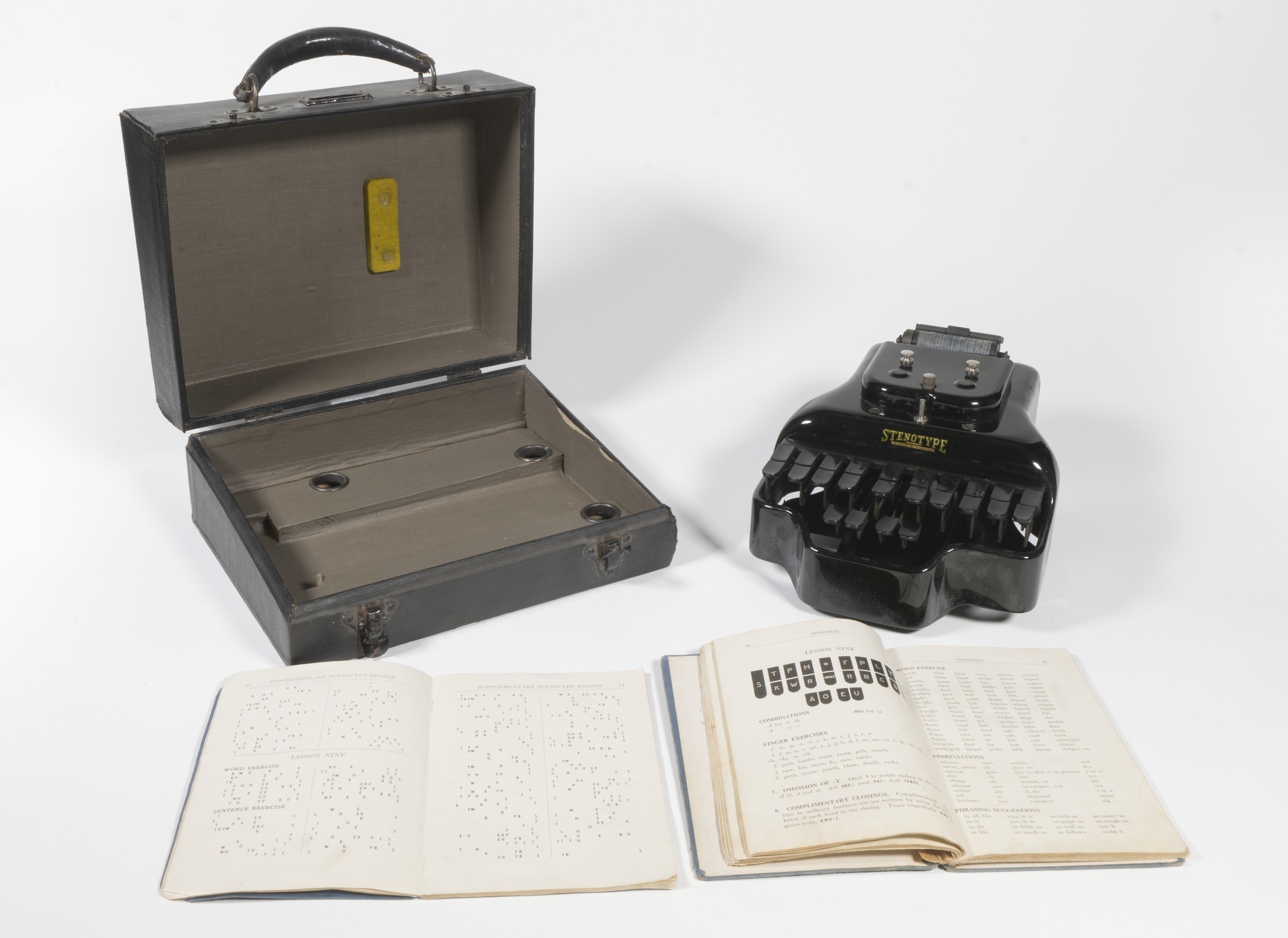
Lucy joined her sister Ethel when she opened a shorthand and typing school in the Mutual Life Building in Hereford Street in 1898. Not only was instruction given in shorthand, typewriting and mimeography (a stencil based duplicating process) but, according to their advertisement in the Press, they also offered legal typewriting “executed with secrecy and despatch” and could report on meetings, arbitration and court cases in verbatim or condensed form. Ethel and Lucy passed the examination to become Shorthand Court Reporters in 1905 and 1907 respectively. Ethel worked as a court reporter until her death in Auckland at the age of 45.
In about 1911, Lucy began working as a private secretary, then usually a male role, for Benjamin Fuller (later Sir) of Fuller’s Vaudeville, a theatre company that toured New Zealand for many years. Benjamin and his brother John moved their headquarters to Sydney in about 1912 and Lucy went with them. There she married a Scottish accountant, William Kenneth Sturrock and the pair had a son the following year. Lucy did not give up her career after marriage and a baby, which women usually did at the time, and continued to use her maiden name professionally.
The Fullers spent £740,000 building the St James Theatre in Sydney, which opened in 1926, just before the Great Depression started to bite. Lucy became the manager of the 11–storey complex and oversaw the leasing out of the commercial spaces, which The Age, in 1938, described as “quite an undertaking for a woman”. Despite the Depression, “through her clever work” Lucy ensured that every office was rented.
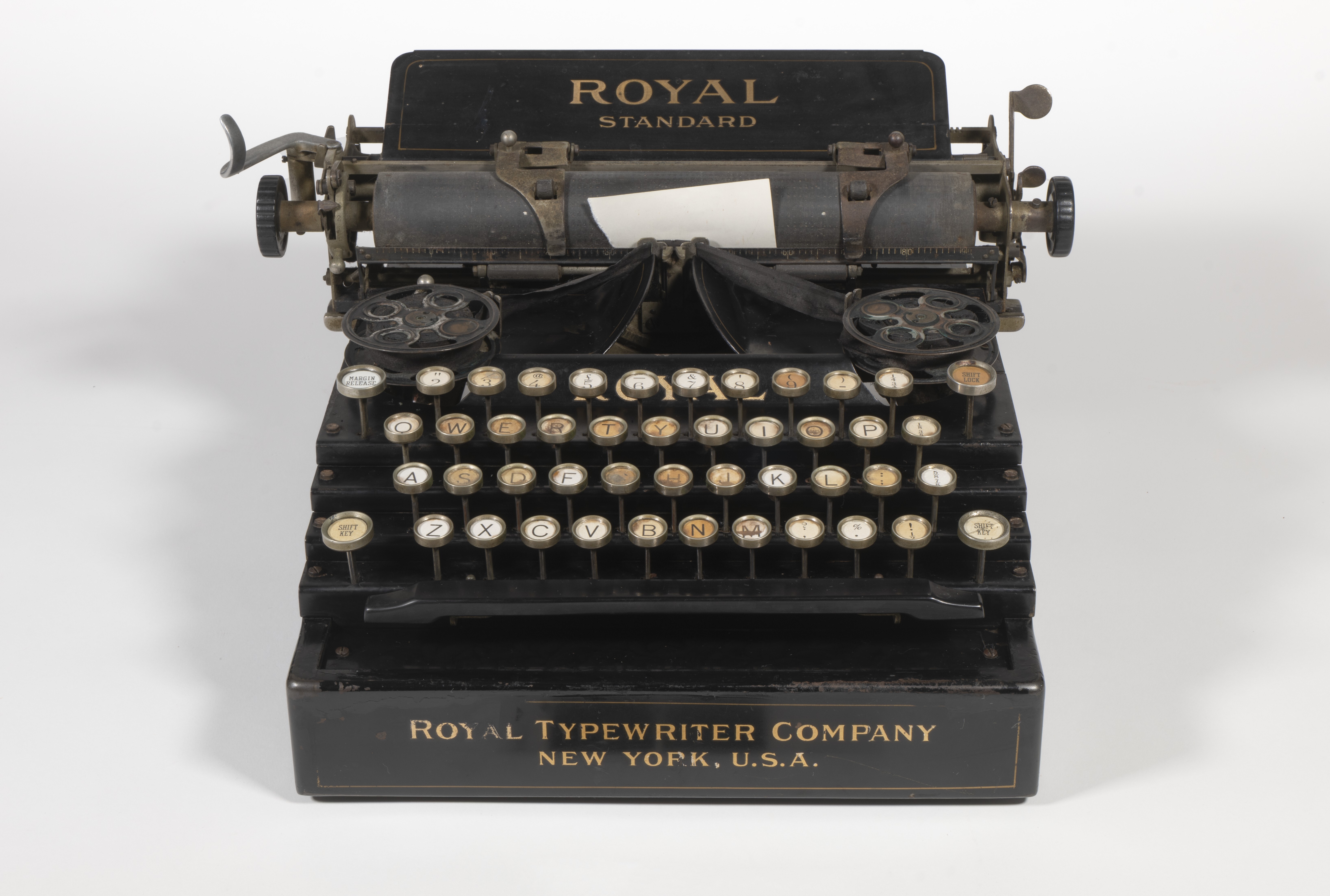
Later, Lucy went on a tour of America and Europe, partly on holiday but also to study commercial buildings to gather development ideas for the underutilised basement in the St James building. While in England, Lucy was described as “Australia’s No. 1 Business Woman”.
After her return to Sydney, Lucy continued managing the St James Building and became the director of a real estate company. She later recalled that she became a stenographer at aged 14 and perfected 220 words a minute because she dreamed of holding a “managerial secretaryship”, a dream she achieved. When Lucy died in 1942, she was described as John Fuller’s “right-hand man” and reputedly one of the highest-paid women executives in Australia.
Her journey from a Christchurch typing school to top business executive over about 30 years shows how women entered office work in the early twentieth century. Lucy’s career forged a path that many women would follow into the future.