

Painting research often involves carefully turning a work over to examine the back – the verso as we call it – as this hidden side often reveals clues to the artwork’s story and history.
The back of one such work in Canterbury Museum’s collection led to the story of a house fire, the well-known Christchurch architect Heathcote Helmore, and a revealing image of the painting hanging in an ornate 1920s country estate outside Wellington.
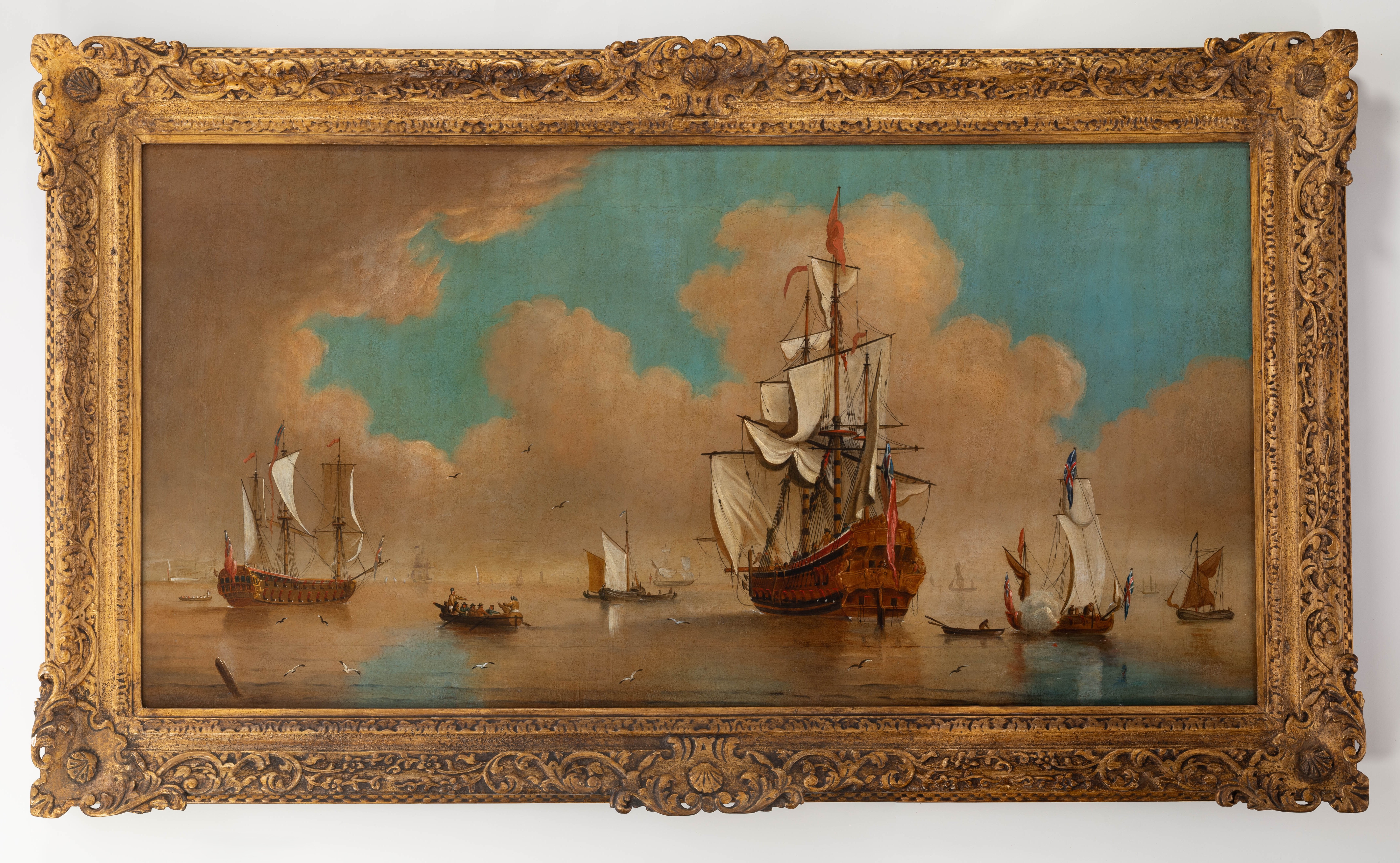
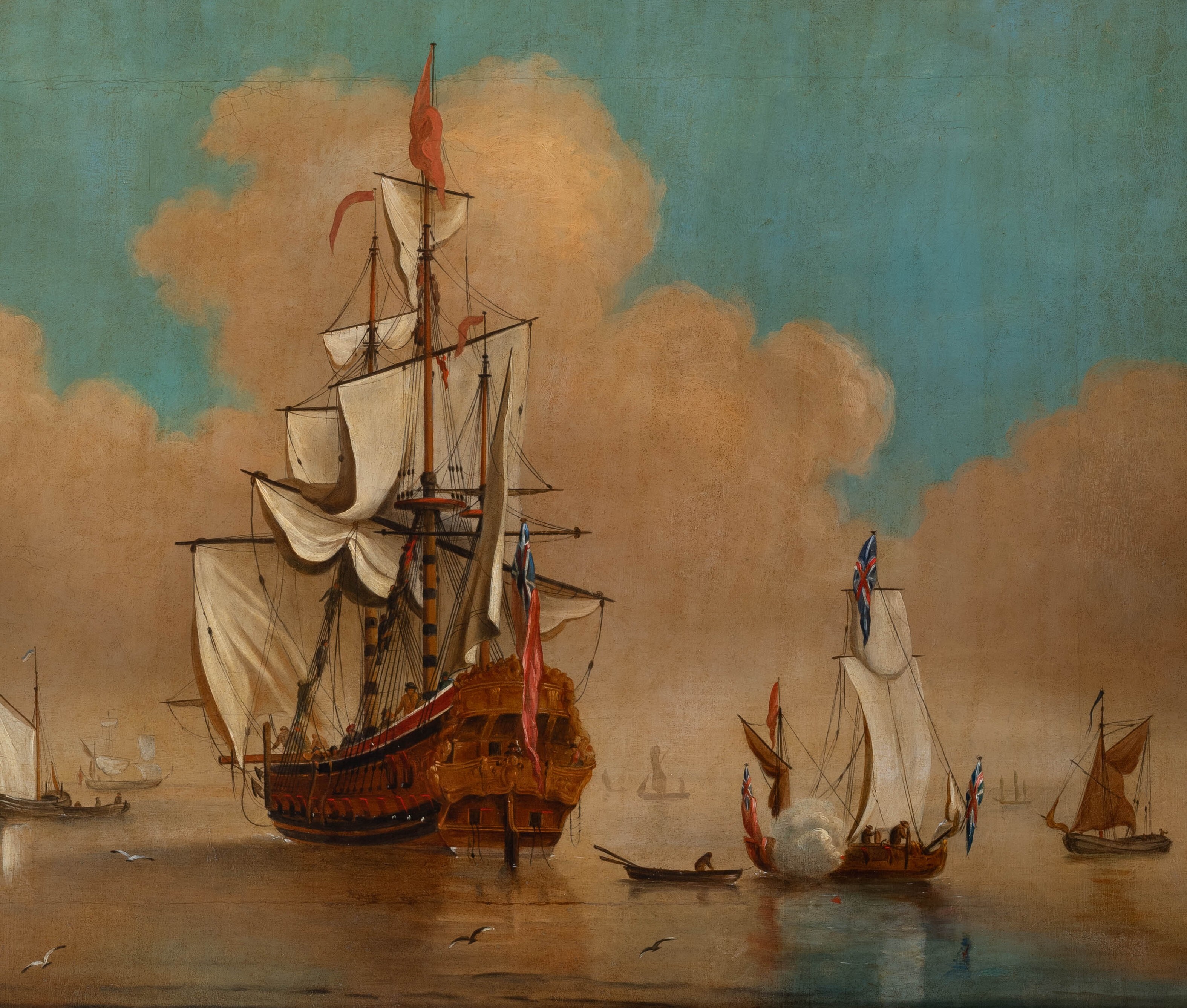
The painting in question is a large, striking, seascape of British Men of War ships in the foreground and a multitude of other ships and smaller vessels populating the horizon line. The sea is calm. The artist is unknown, but the work closely resembles others by the English artist Peter Monamy (1681–1749). It was possibly painted in his style, copied from one of his works or painted by one of his artist friends. Monamy was noted for his marine paintings and his works were heavily influenced by the Dutch-born marine painter Willem van de Velde the Younger.
Framed in a neo-Baroque gilt frame, the work is filled with subtle detail. Monamy’s paintings usually depict actual ships, but the naval battles are not known to be based on specific events. For most of his painting career he lived in a time of relative peace for the English fleet.
The work in the Museum collection features two larger ships, flying the British Red Ensign, Union Flag and red squadron colours. Rows of cannon can be seen protruding from the sides of the Man-o’-War vessels. The largest of these Man-o’-War battle ships could carry almost 1,000 men and over 100 cannon.
On the back of the painting is a label from a London antiques store Lenygon & Morant Ltd, located on Old Burlington Street, and a handwritten inscription recording the sale of the work to Mrs Ella Elgar in 1924.
Ella was born into a wealthy sheep farming family from the Wairarapa. In 1890 she married Charles Elgar and the couple moved into Fernside, which was on Charles’ large (over 1,000 acres) estate near Featherston. In 1903, Ella’s father died leaving a significant amount of money to the family.
Charles and Ella furnished their home with many luxurious items, including art and antiques. But in 1923, while the couple were in Wellington, Fernside burnt down, destroying all their belongings.
The Elgars engaged Christchurch architect Heathcote Helmore, of Helmore and Cotterill, to design a new Fernside. The house still stands to this day and can be viewed online here.
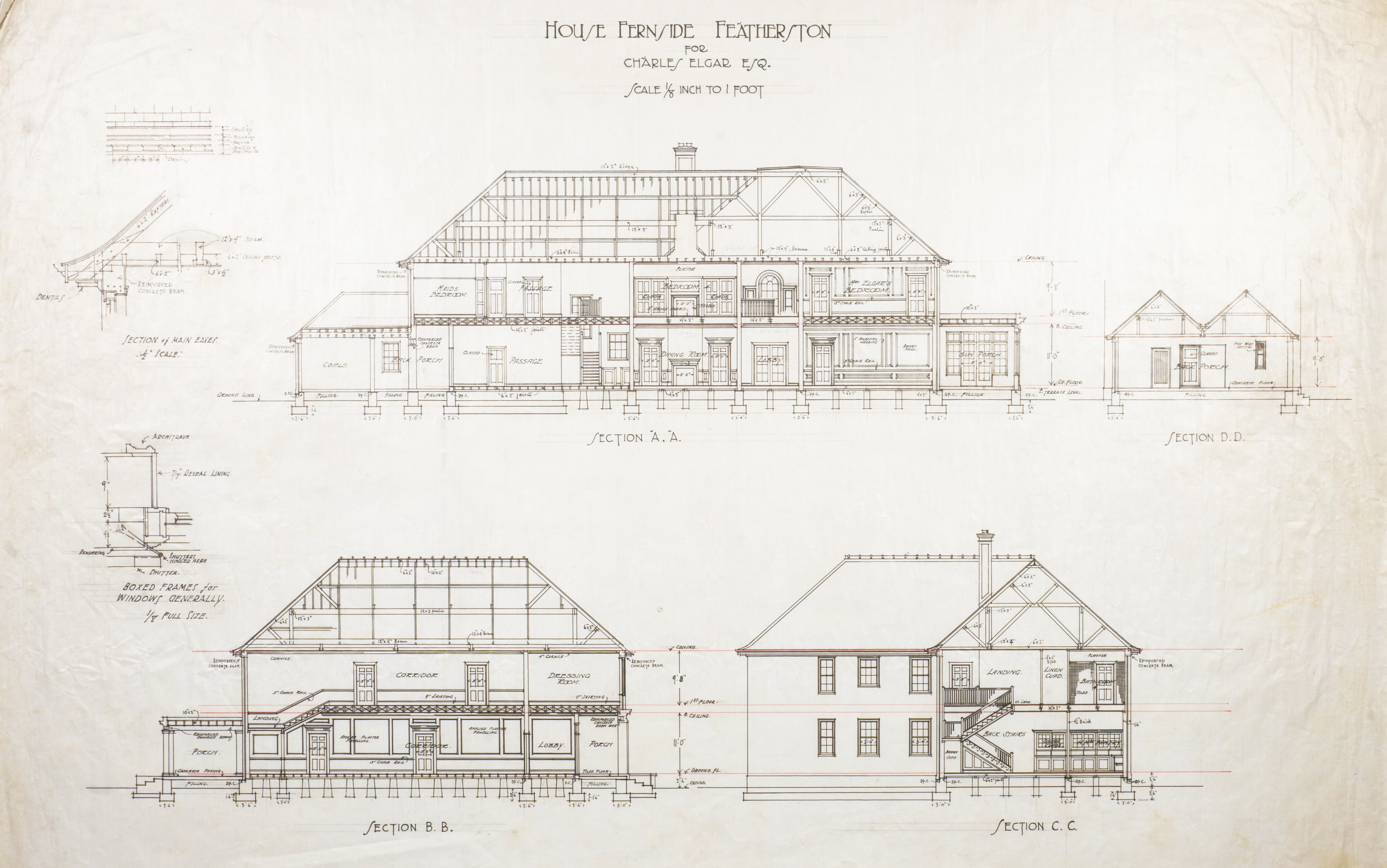
Canterbury Museum cares for the original plans for this replacement grand home. Occupying over 3,000 square metres, it originally had over 40 rooms. The design of the neo-Georgian house was influenced by Edwin Lutyens, whom Heathcote Helmore had recently been studying under. It was set amongst a beautiful garden.
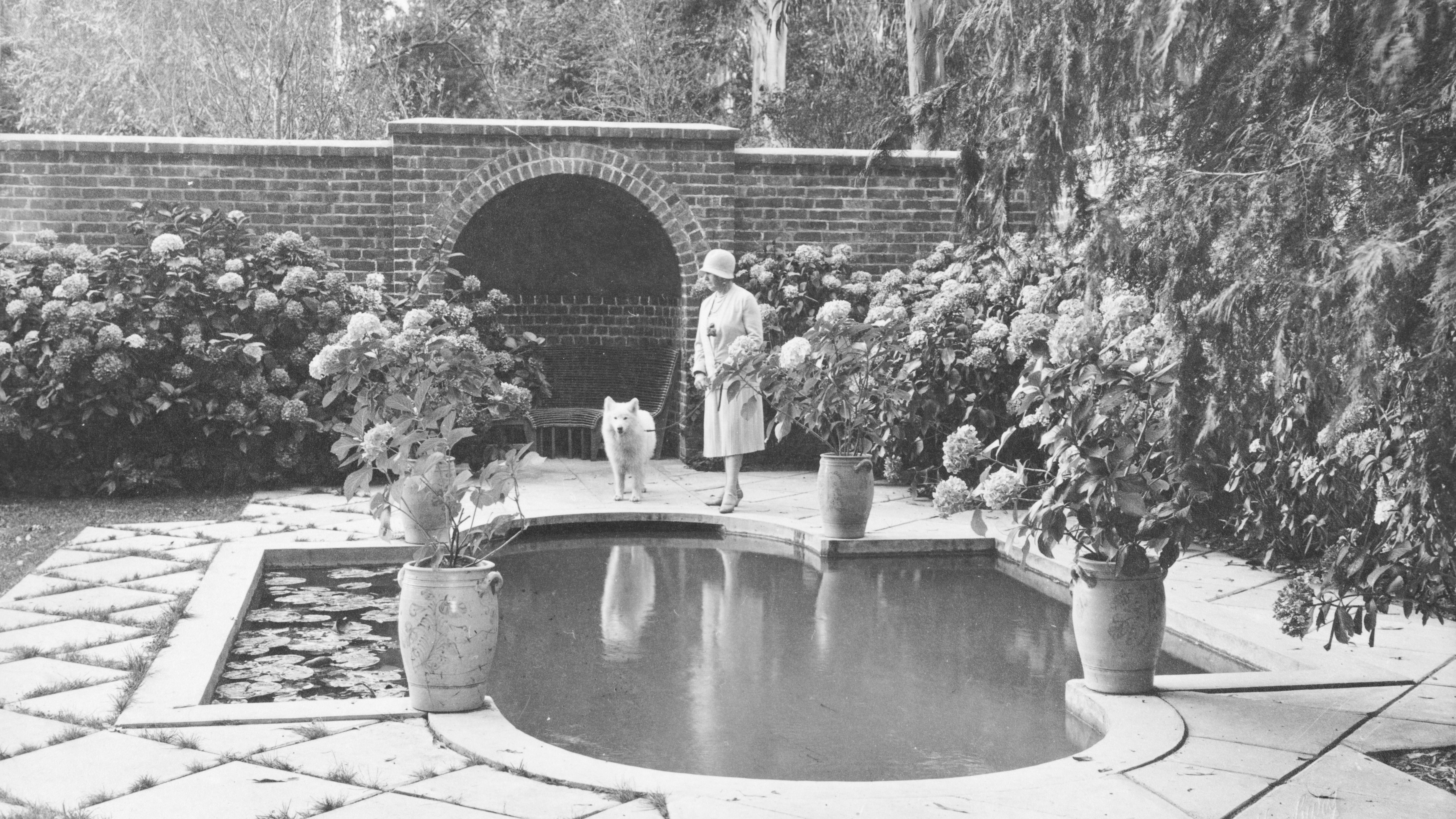
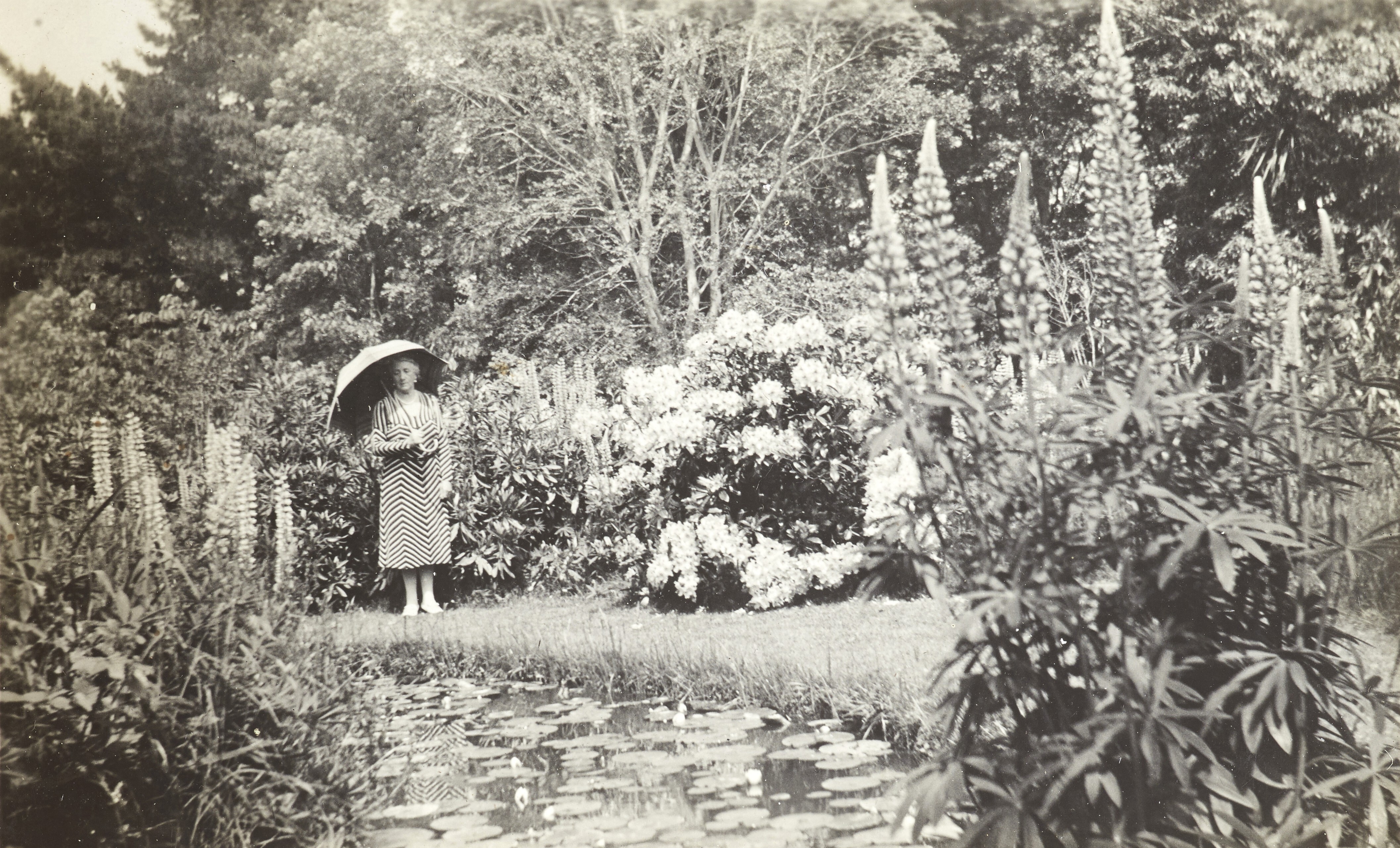
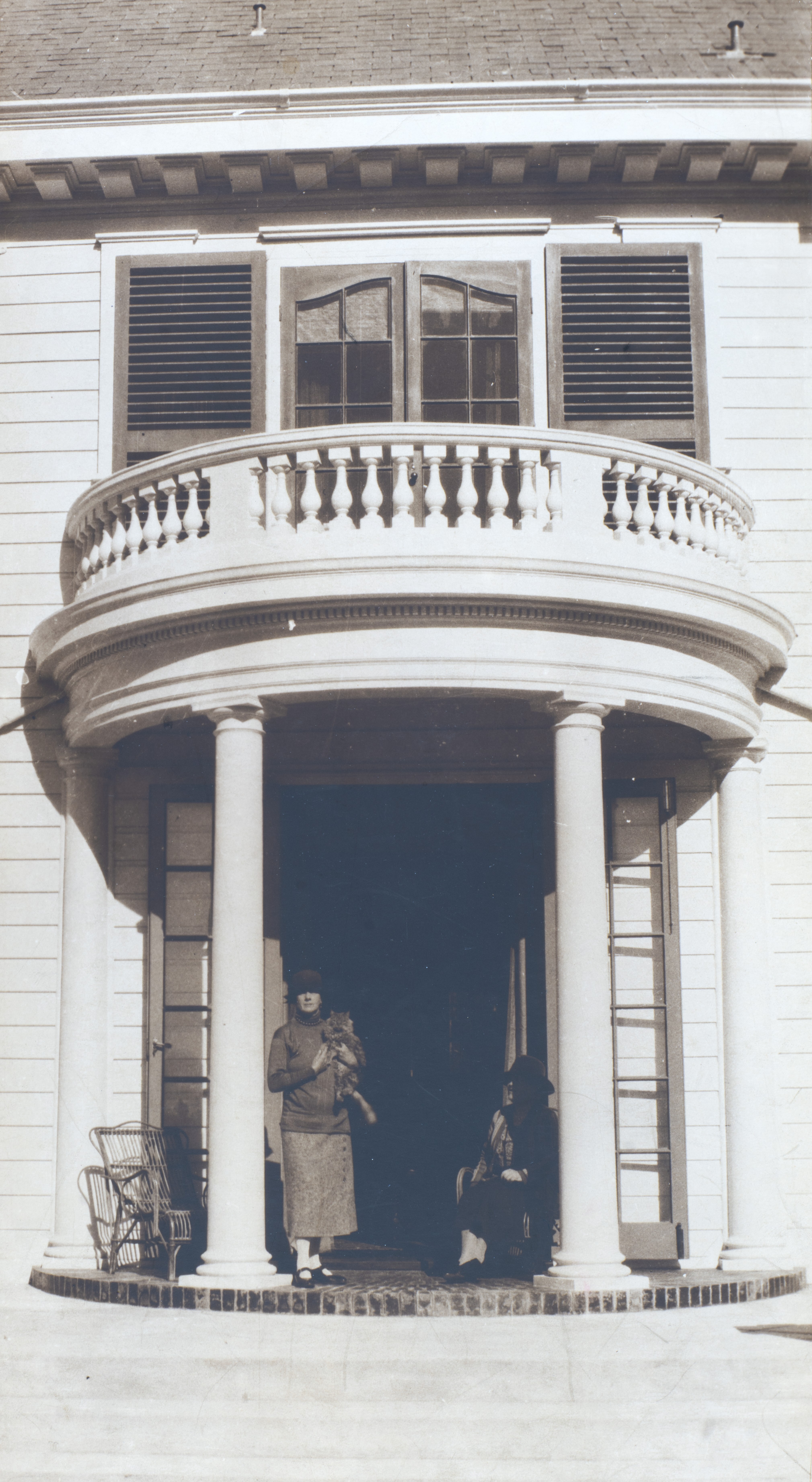
This image of Ella Elgar standing in the gardens is part of a photographic album produced by Ella’s Scottish Ladies’ Maid, Jean Hannan. The album is now part of Museum of New Zealand Te Papa Tongarewa's collection. In the same album is a photograph of the Fernside lounge or drawing room. The painting from the Canterbury Museum collection hangs above the fireplace in the room beyond.

When owner Ella Elgar died in 1945 the painting was bequeathed to Christchurch-based Heathcote Helmore, along with a red lacquer corner cupboard, red cabinet, and some blue china.
After Ella’s death, Helmore helped set up the The Elgar Rooms at the Dominion Museum in Wellington (now Te Papa). These rooms contained a collection of Georgian, Queen Anne and Stuart period items from the Elgar Collection bequeathed to the Dominion Museum. The majority of the Elgar’s extensive art and furniture collection is now cared for by Te Papa.
In 1965, Canterbury Museum received an extensive and valuable collection bequeathed by Heathcote Helmore, which included two other paintings, along with this artwork, and numerous decorative arts, furniture and furnishings, along with snuff bottles, Japanese netsuke and an architect’s drawing and writing desk. The Museum now cares for over 100 items from Helmore.
This painting was part of that bequest and is currently being assessed for possible display in the Robert McDougall Gallery when the new Museum opens in 2029.