


Canterbury Museum has a collection of nearly 150 glass vessels of Classical origin. Many of these were acquired in the early 1900s along with several other ceramic vessels from the Mediterranean.
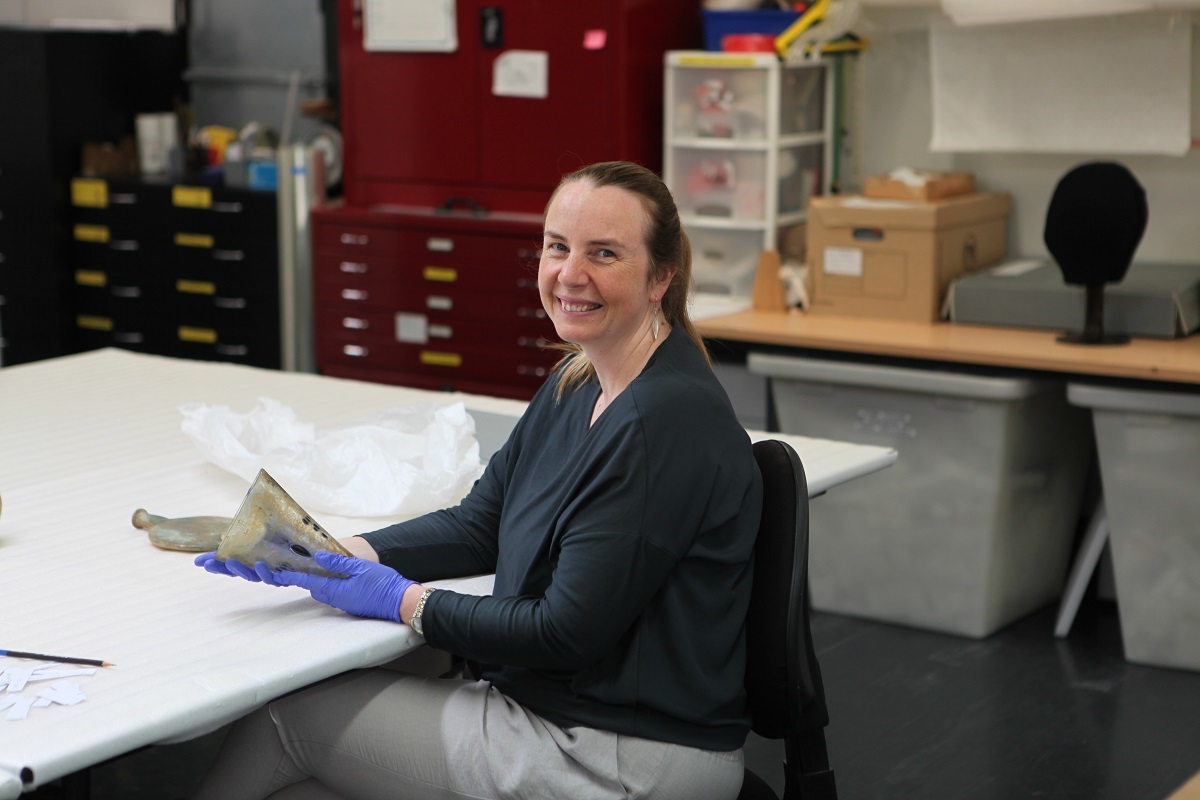
Most were excavated from tombs and other sites in Cyprus and near the ancient cities of Tyre and Sidon (in modern Lebanon) between 1873 and 1881. In 1901 The Press lauded this collection as being “without question the best in the Southern Hemisphere”.
Sidon and Tyre were the most powerful city states of ancient Phoenicia and renowned for their skilled glassmakers and the production of a purple dye which was highly sought after. They were captured by the Persians, overthrown during Alexander the Great’s conquest of Phoenicia in 332 BC and eventually became part of the eastern Roman Empire from 64 BC.
The glass in the Museum’s collection has been attributed to the Phoenicians but has never been researched in any detail. Many of the pieces may in fact be of Roman origin. There are a variety of forms including drinking vessels, plates and bowls as well as jars and flasks for storing perfumes and oils.
A selection of these vessels will be borrowed by the Teece Museum for their upcoming Feasts of Fancy exhibition. The entire glass collection will also be studied next year by a Masters student from the University of Canterbury’s Classics Department. One of this research project's outcomes is to enable the Museum to showcase this remarkable collection through Collections Online.


