

What do Museum staff do when their building is closed for redevelopment?
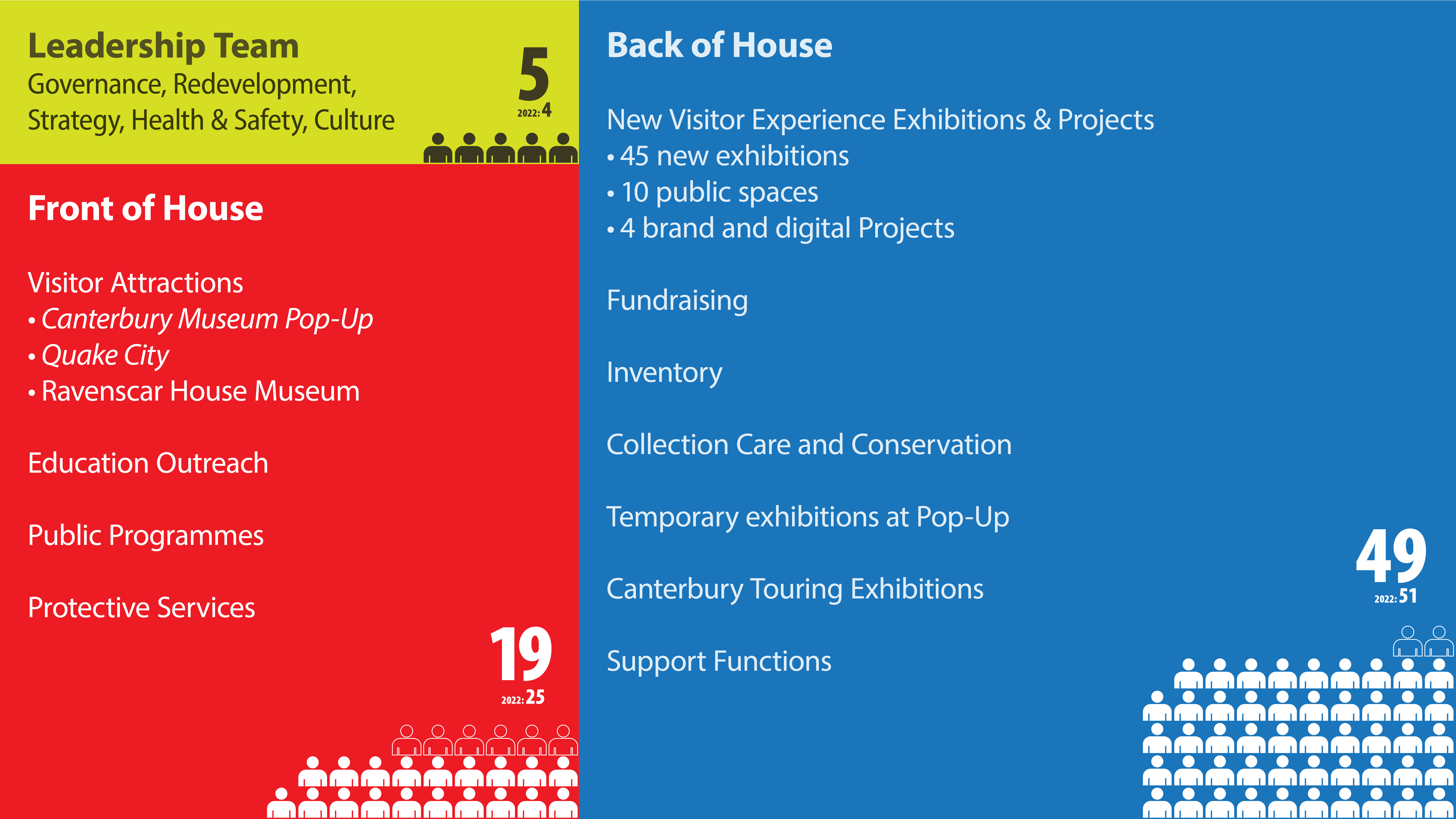
We’re regularly asked, and see comments in the media and online, about why the Museum continues to employ about the same number of staff as we did when the Rolleston Avenue building was open.
People often only see the Museum as a free visitor attraction with great exhibitions and displays telling the stories of Waitaha Canterbury and Antarctica – a fun, free family day out.
The essence of the Canterbury Museum is not the bricks and mortar of the building, but the collection of 2.3 million taonga (treasures) amassed over more than 150 years of collecting and donations from generations of Cantabrians and from around Aotearoa New Zealand and the world. This is at the heart of all Museum mahi (work).
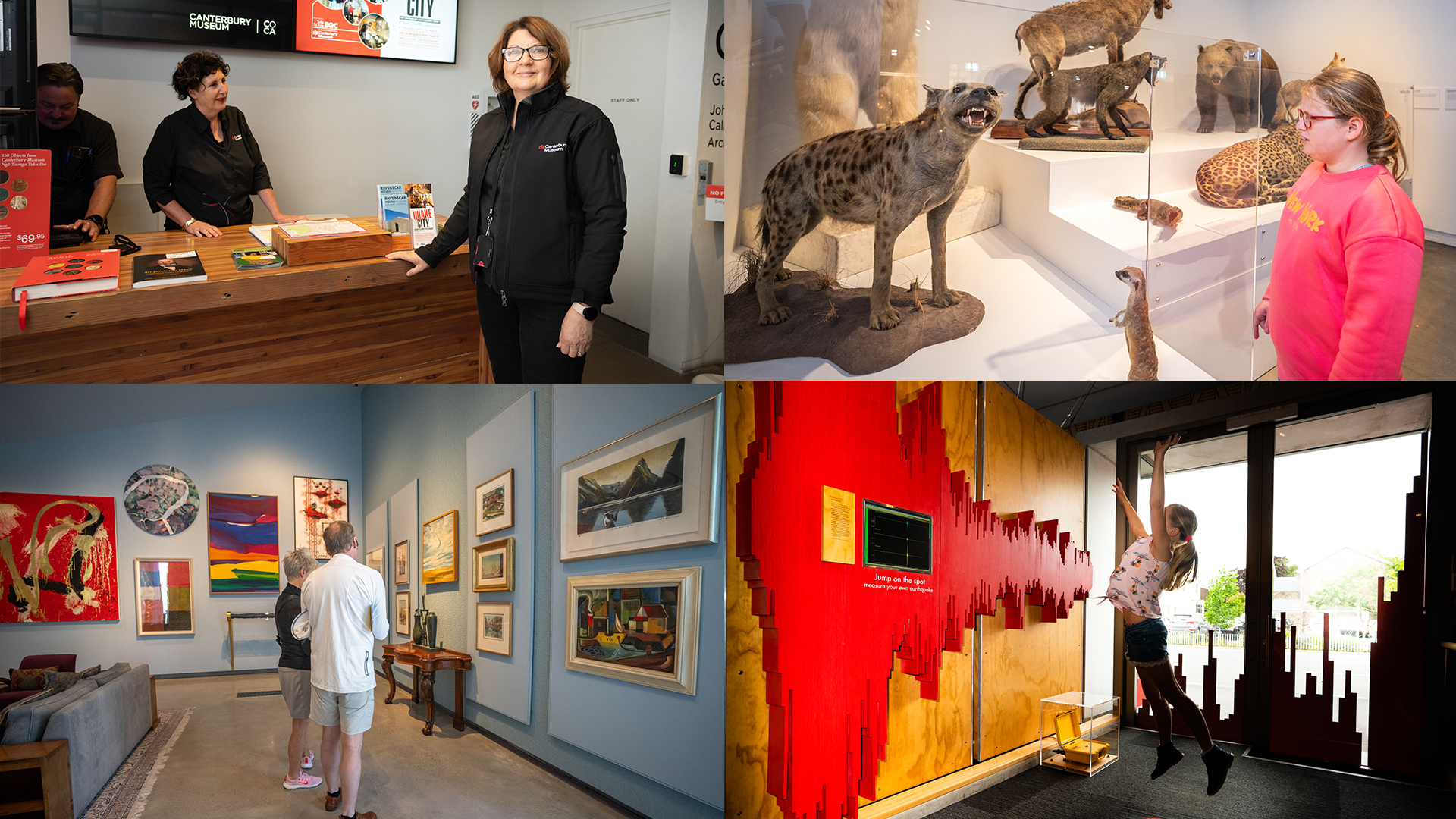
While we are out of Rolleston Avenue, we're still operating three central city visitor attractions - the Canterbury Museum Pop-Up, Quake City and Ravenscar House Museum. We're also researching, designing and creating the 60-plus new exhibitions, public spaces, and other projects for the new visitor experience in the new Museum. On top of all this we're continuing to inventory the collection and provide public access to the collection.
Virtually all of our back-of-house team – about 49 staff – are working on aspects of the new visitor experience, which needs to be ready to install by late 2028.
There are around 45 exhibition spaces to be created. These range from single objects, some of which are huge, like the blue whale skeleton that will be suspended from the ceiling of the atrium, to smaller collection rich displays of around 35 sq metres. Some of the larger exhibition spaces include several different displays, such as the new Antarctic Gallery, the Discovery centre for children, the Christchurch Street and Araiteuru. This last is the the place where mana whenua will bring to life their stories. These exhibitions are complex and challenging, requiring a lot of work to create a rich visitor experience. Researching and writing stories, designing, building and installing 6,500 sq metres of space – 50% more than the old Museum - is a monumental task.
To date, we’ve started work on 26 exhibitions, about 45% of the exhibits that need to be completed, while we are out of Rolleston Avenue.
Every exhibition has a project plan that records all the details needed when the day comes to install the exhibition in the new Museum. Staff are working across three or four exhibitions at any one time, researching and writing stories, identifying collection objects for display, and collaborating with exhibition staff to create immersive spaces for visitors to enjoy.
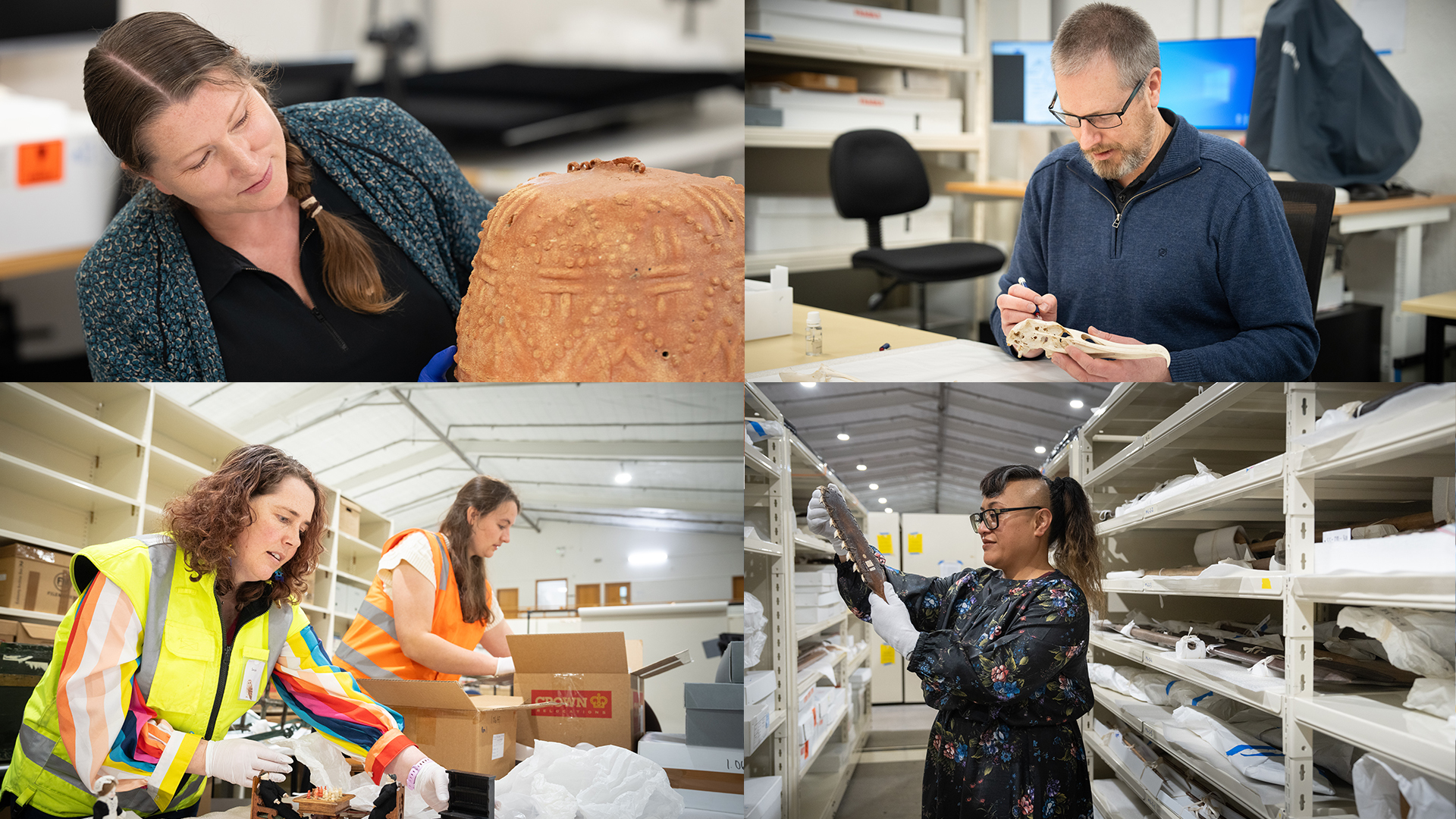
As every exhibition is prepared, Museum technicians locate the objects and log them in the project plan. Every object is checked, cleaned, and if necessary, given some conservation treatment. All the objects are then packed away in labelled crates ready for installation day.
In other parts of the warehouse, a team is continuing our long-term project started in 2017 to inventory the 2.3 million objects in the collection. A record is created for every object on Vernon, the Museum collection management database, along with an up-to-date location and photograph. The collection, which dates back to 1867 when Julius Haast first put his geology collection on display at the Provincial Chambers, has never been fully digitised and some of the older records are incomplete.
Like many nineteenth century museums, objects came into the collection in the early days without being properly documented. When we packed up Rolleston Avenue, we found that about a third of the objects in the basement storeroom at Rolleston Avenue had no record in the database.
The team are currently prioritising the thousands of objects that will be displayed in the new Museum. To date, they’ve inventoried 545,869 objects, including the entire contents of the Christchurch Street.
On top of all that a twenty-first century Museum needs the twenty-first century technology that visitors have come to expect. The technology in the old Museum was developed piecemeal, much like the buildings, and often didn’t work very well. Most of the administration was paper-based and our different technology systems didn’t communicate well with each other. In the new Museum visitors will be able to book events, tickets to special exhibitions, a table in one of the two cafes and read more about the exhibitions on a new digital app. We'll also need a new website for the new Museum.
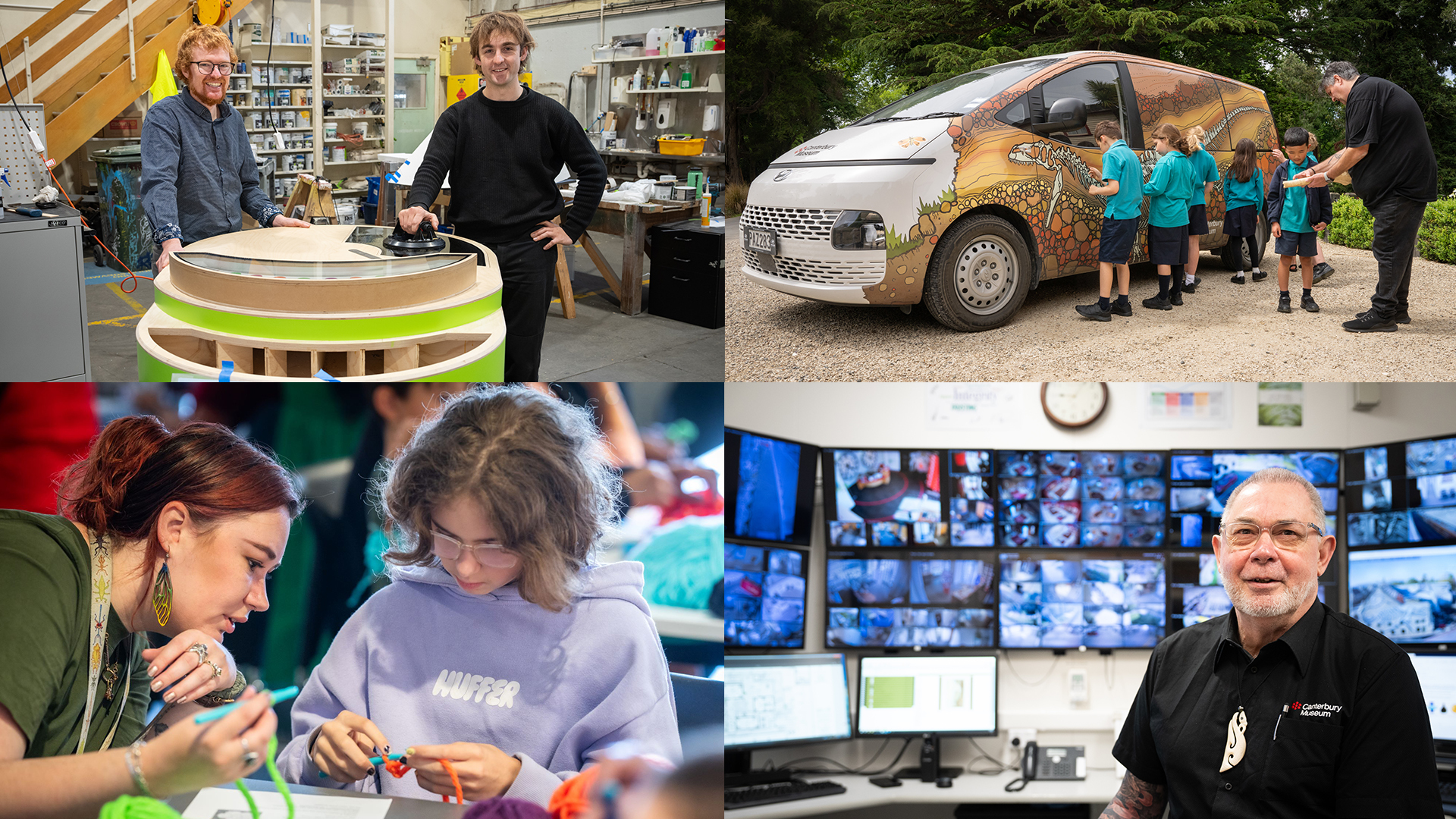
At the same time staff are providing all the usual services expected of a Museum: loaning objects for research and display in other institutions, providing digital and in person access to the Museum collection, providing images from the collection for publication and personal use, caring for and conserving objects, creating touring exhibitions for display in regional venues; installing new temporary exhibitions at the Canterbury Museum Pop-Up, presenting public programmes and delivering lessons to students in classrooms around Waitaha Canterbury. The Museum building on Rolleston Avenue may be closed, but we are busier than ever.
Our front of house team - about 19 staff - operate the Canterbury Museum Pop-Up at 66 Gloucester Street, along with Ravenscar House Museum and Quake City. All these buildings and our temporary storage facility and offices at Hornby, are managed and maintained by our small building operations team. The protective services team look after security at Hornby and at our visitor attractions.
It’s a lot of work to create an extraordinary new Museum and keep the place running. But we can’t wait to open the doors to your new Canterbury Museum in 2029.