


If you went to see SHIFT: Urban Art Takeover, you might have wondered who the wahine (woman) in this stunning portrait by Irish artist Aches is. A model? A TV personality? A sports star?
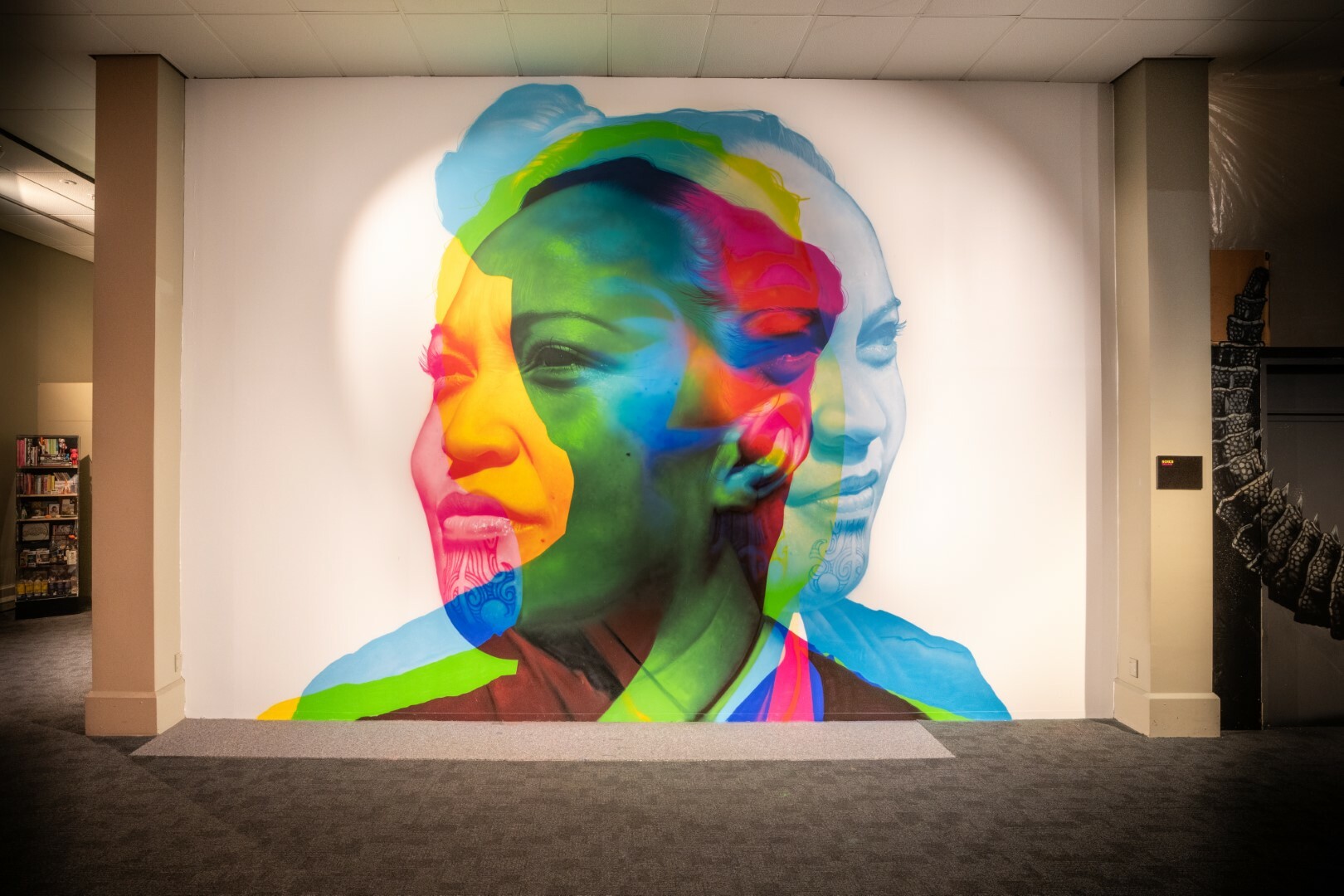
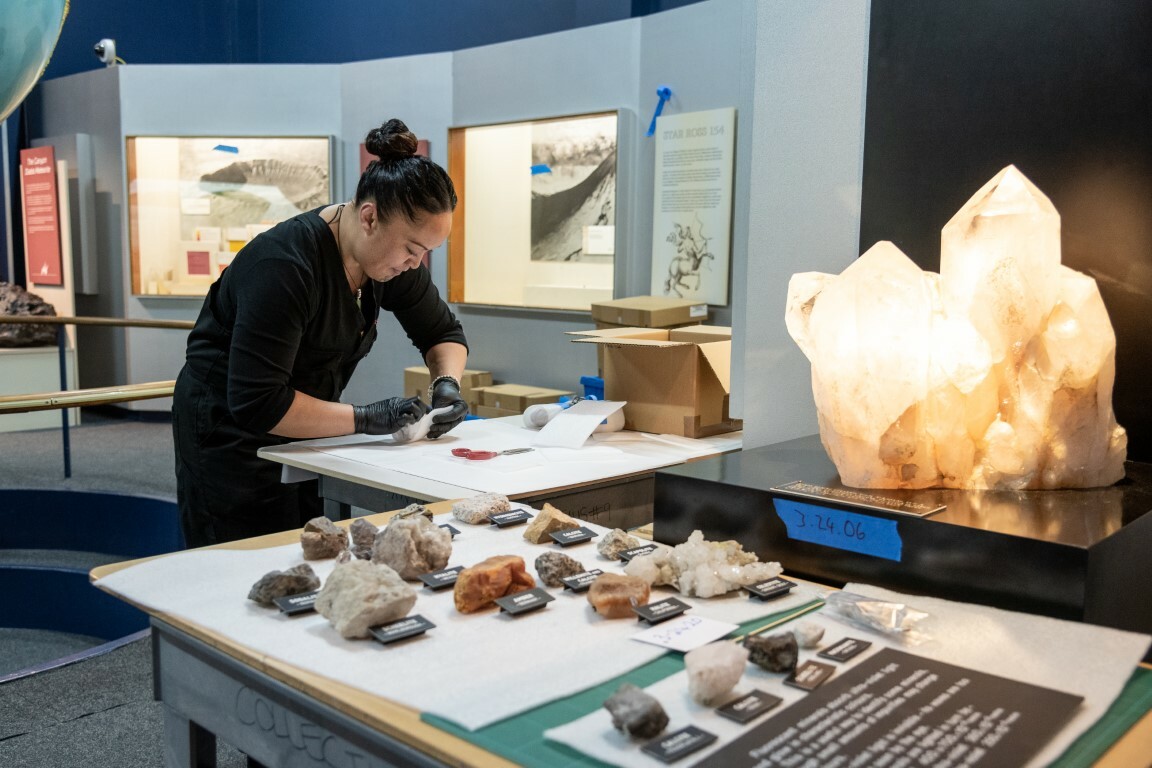
The answer lies closer to home. She is Riki-Ani Mareroa, Collections Technician Human History here at the Museum.
When the Museum contacted Aches about being part of SHIFT, he began researching the art of the tangata whenua (people of the land) of Aoteroa New Zealand.
He is interested in the parallels between Māori and Irish experiences of colonialism, and the revival of Māori language and cultural practices here in Aotearoa as a mirror of his own culture.
Aches was drawn to paint Ani partly because of her moko kauae (chin tattoo). Ani’s ringa tā (tā moko practitioner) is Christine Harvey, an artist whose work Aches coincidentally studied before he flew to Aotearoa.
Ani had her moko kauae revealed last year. It is far more than a decoration – the design includes references to her iwi and her place within her whakapapa (genealogy). It is an acknowledgement of her tīpuna (ancestors), an outer manifestation of her inner reality and a reflection of Ani’s own wairua (lifeforce or spirit).
She obtained permission from her extended whānau (family) as well as ringa tā Harvey for Aches to reinterpret it.
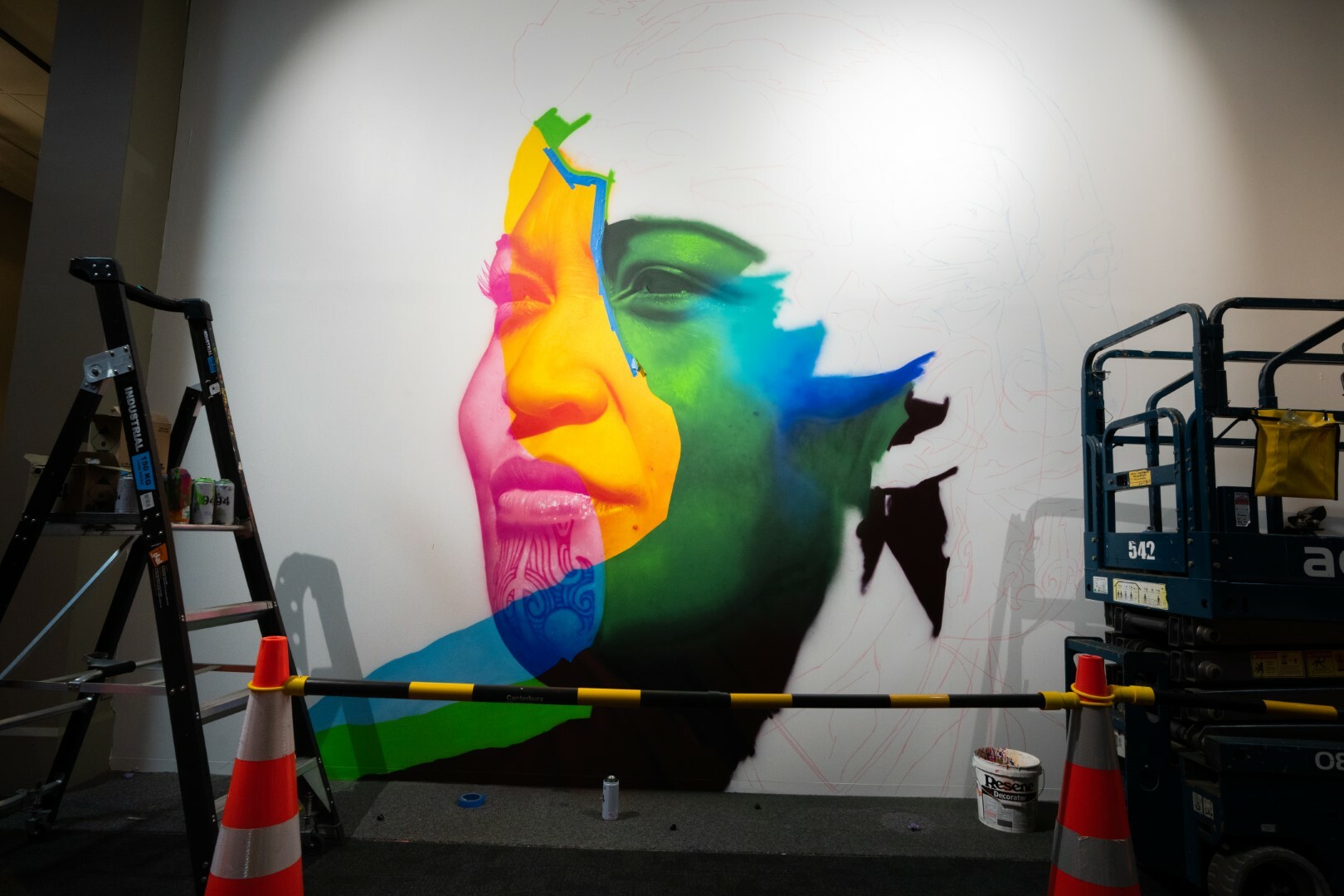
Before Aches started painting, he and Ani sat down for several wide-ranging conversations covering the wearing of moko, Māori culture and colonisation.
“We found out we have so much in common, in terms of the effects of colonisation, like loss of language. That really surprised me. They were more or less the guinea pigs for colonisation,” Ani says.
Although she was nervous about seeing her face on a wall, when she saw the final result she was filled with pride.
“Growing up, my whānau don’t have many photos of me, I just didn’t like being photographed. Then I got my kauae and it’s like, ‘Yeah, put me on the wall!’ I’m happy to look at myself,” she said.
Ani’s whānau were equally proud. When she surprised her tamariki (children) with the work, they were moved to tears.
“In that moment, my daughter, what came out of her mouth with her tears was, ‘It is good to be Māori’. And I thought, ‘There we go. That’s my purpose.’”


